


About Me

NMR Spectroscopy · MR Imaging · Computational Chemistry

I am Cameron Alexander McCord Gurwell, a researcher at McMaster University, originally from Boston and now based in Hamilton, Ontario. I received my undergraduate degree in Chemistry from McMaster in 2025 and am pursuing a M.Sc. studying how local structure governs ion motion in energy-storage materials. My work combines solid-state NMR, in situ and operando 7Li MRI, and machine-learning atomistic models to connect lithium dynamics, electrolyte design, and battery performance.

I am also exploring MRI development and machine-learning approaches to image reconstruction. Across these projects, I am interested in how spectroscopy, imaging, and computation can reveal the structure and dynamics of complex materials.

McMaster University · Research Portfolio
Picture of Cameron A. Gurwell
Physical Chemistry · McMaster University

Research

Select a project to explore more.

1 MAGNETIC RESONANCE · IMAGING Magnetic Resonance Imaging Investigating MRI methods development and applications for battery research.

Research overview

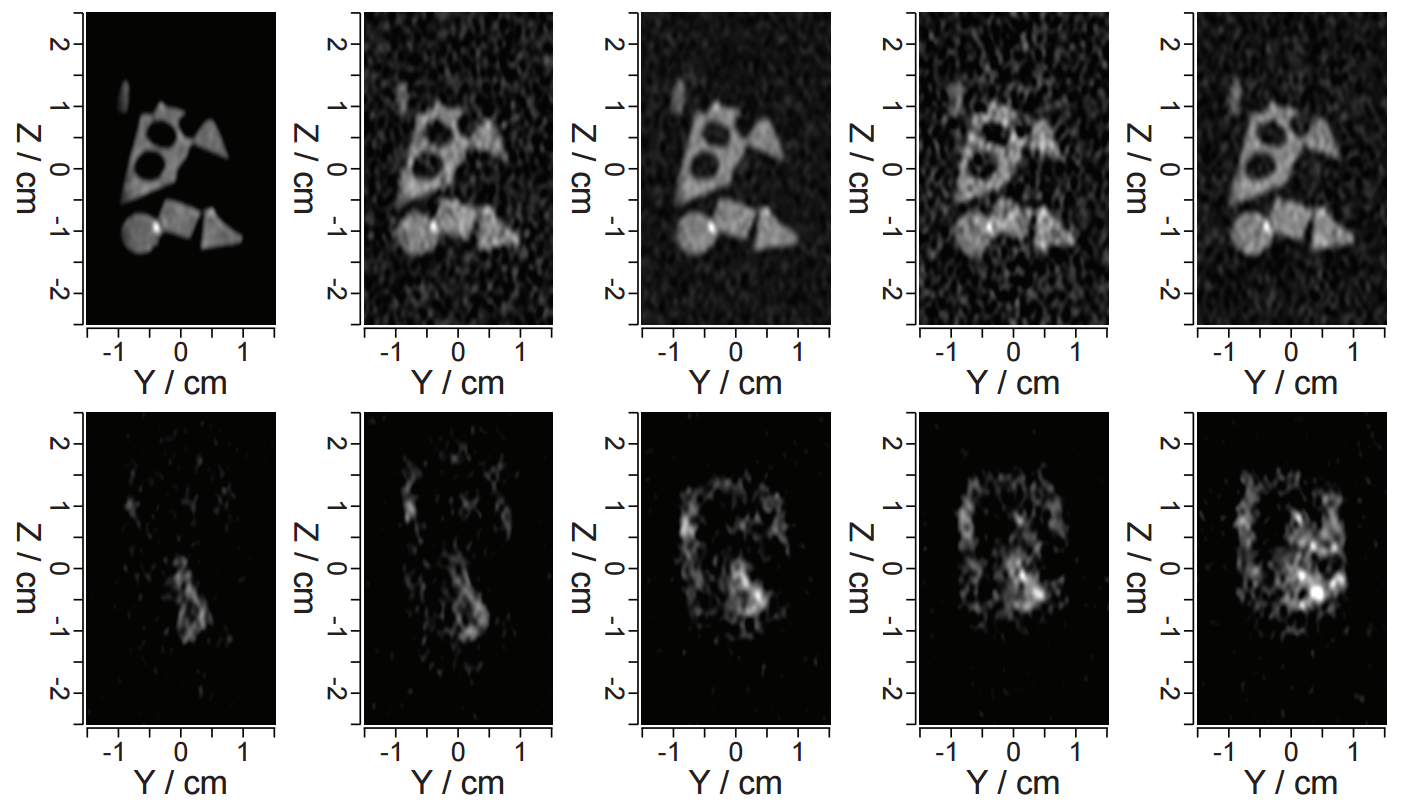
Magnetic resonance imaging provides spatial context for electrochemical processes that are difficult to observe inside working batteries. My MRI research focuses on non-destructive, in situ and operando methods for mapping lithium distribution, plating, transport, and structural evolution in intact cells.

Two complementary directions guide this work: direct 7Li MRI using selective excitation to enhance lithium-metal sensitivity, and rapid MRI using SPRITE, advanced sampling, and reconstruction strategies to improve temporal resolution. Because lithium metal has an extremely short transverse relaxation time (T2), ultra-short echo time (UTE) sequence design is also important for capturing signal before it decays. Together, these approaches connect the spatial fidelity of MRI with the dynamic information needed to study lithium-ion batteries during operation.

Research themes

  • Direct 7Li MRI of lithium metal and plating
  • UTE sequences for short-T2 lithium-metal signal
  • Rapid MRI for in situ and operando studies
  • Sampling and reconstruction for dynamic battery imaging

Research direction

The direction of this work is to develop MRI methods that move from sensitive detection toward faster, more quantitative imaging of working batteries. By combining UTE and selective excitation with rapid acquisition, sampling, and reconstruction, the aim is to resolve lithium redistribution and interfacial evolution across useful spatial and temporal scales during operation.

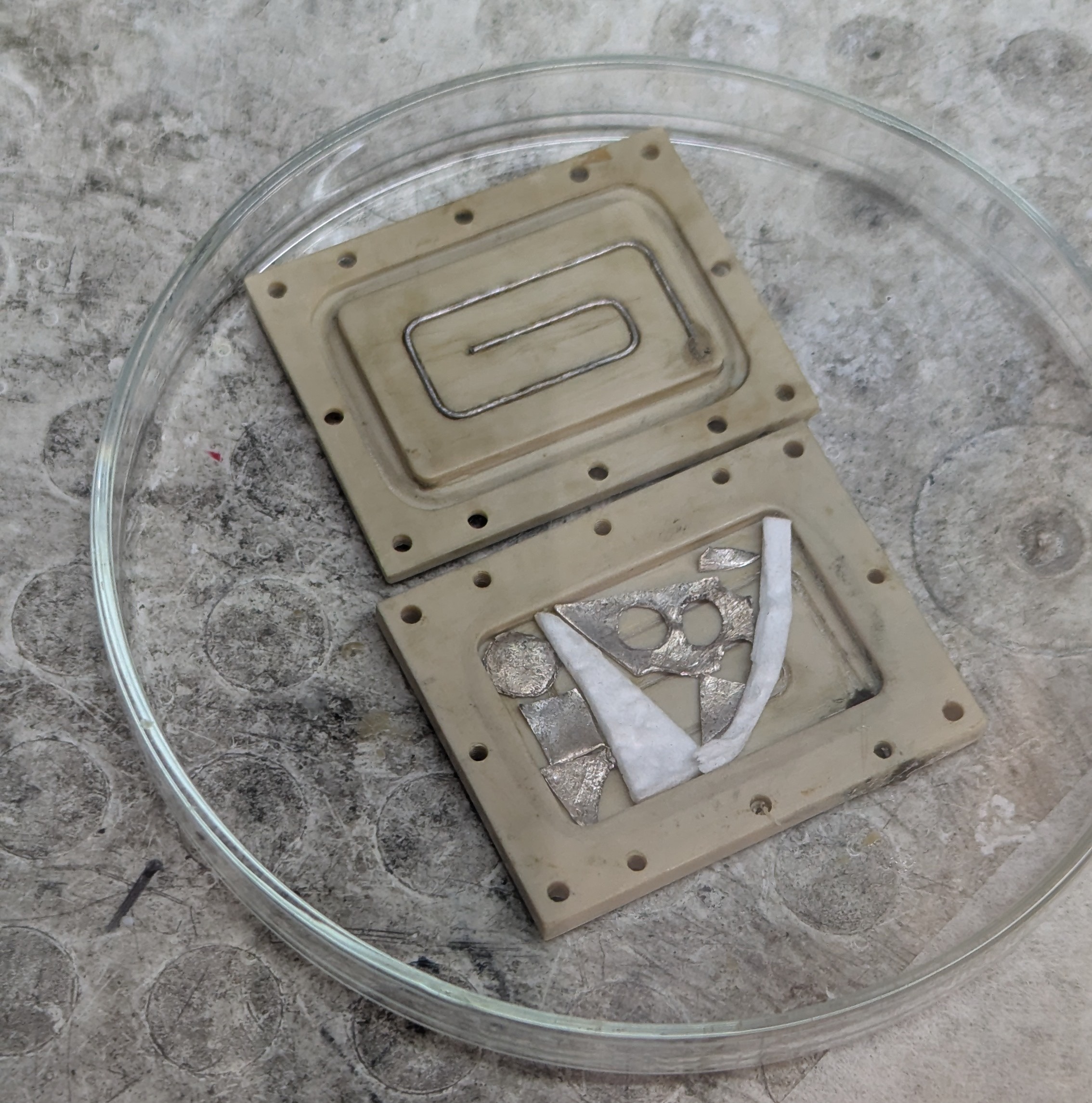
Current work spans lithium-metal phantoms, foils, and functional cells, with an emphasis on improving sensitivity, spatial fidelity, and acquisition speed.

2 MAGNETIC RESONANCE · SPECTROSCOPY · MATERIALS Solid-State Nuclear Magnetic Resonance Probing local chemical environments and structural changes in electrochemical materials.

Research overview

Solid-state nuclear magnetic resonance (ssNMR) provides a site-specific view of local structure, chemical environments, and ion motion in complex battery materials. In fast-conducting sodium electrolytes, multinuclear and variable-field 23Na ssNMR can distinguish immobile sites from rapidly exchanging environments, combining relaxation measurements, 3QMAS spectra, and simulated lineshapes to resolve the mechanisms of sodium transport.

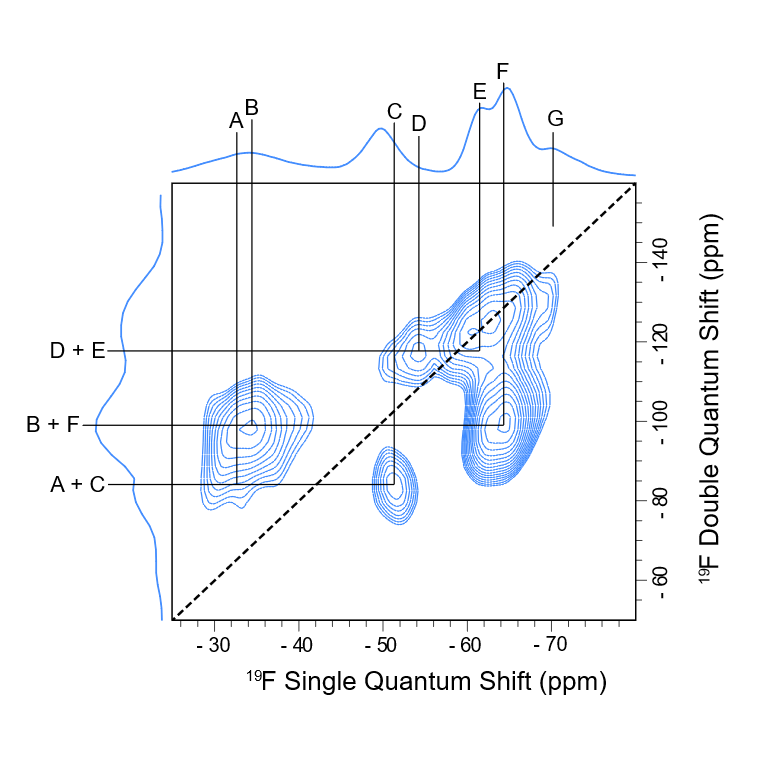
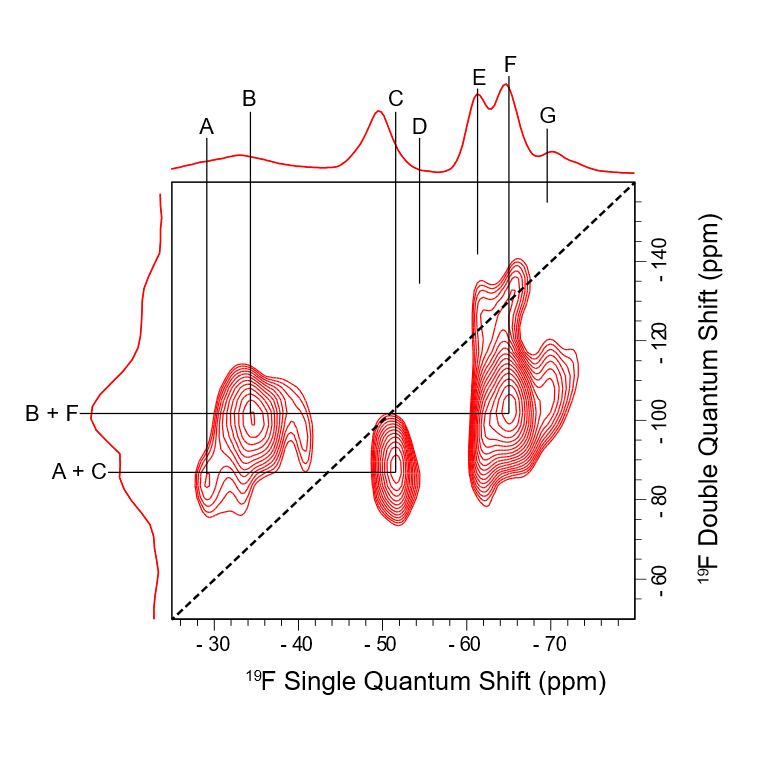
Related work on fluorine-doped lithium oxychlorides combines 7Li and 19F MAS NMR with 2D BABA correlation experiments and relaxometry. These measurements reveal how dopant environments influence local lithium mobility, providing structural information that complements diffraction and helps connect atomic-scale disorder with ionic conductivity. Temperature-dependent T1 measurements can be analyzed through Arrhenius behavior to estimate activation energies for local ion motion. Where relevant, pulsed-field-gradient (PFG) NMR provides a complementary measure of translational self-diffusion through gradient-dependent signal attenuation and diffusion coefficients. Together, these approaches use spectroscopy and computation to understand how local environments govern transport in solid electrolytes.

Research themes

  • Multinuclear MAS and 2D correlation NMR
  • Temperature-dependent T1 and activation energies
  • PFG NMR and translational self-diffusion
  • Simulation-guided links between structure and conductivity

Research direction

The broader goal is to connect local chemistry with transport across multiple length scales. In battery systems, ssNMR and MRI provide complementary views: ssNMR resolves local environments, exchange, and mobility, while MRI maps lithium distribution and interfacial microstructure within intact cells. Together, they can relate spatially resolved changes under electrochemical or mechanical conditions to the underlying ion-transport mechanisms.

Applications span fast sodium conductors and doped lithium oxychloride electrolytes, as well as spatially resolved studies of working lithium-metal cells.

3 QUANTUM CHEMISTRY · COMPUTATIONAL MODELLING · MACHINE LEARNING Universal Machine-Learning Interatomic Potentials Exploring machine-learning approaches to atomistic simulation and materials modeling.
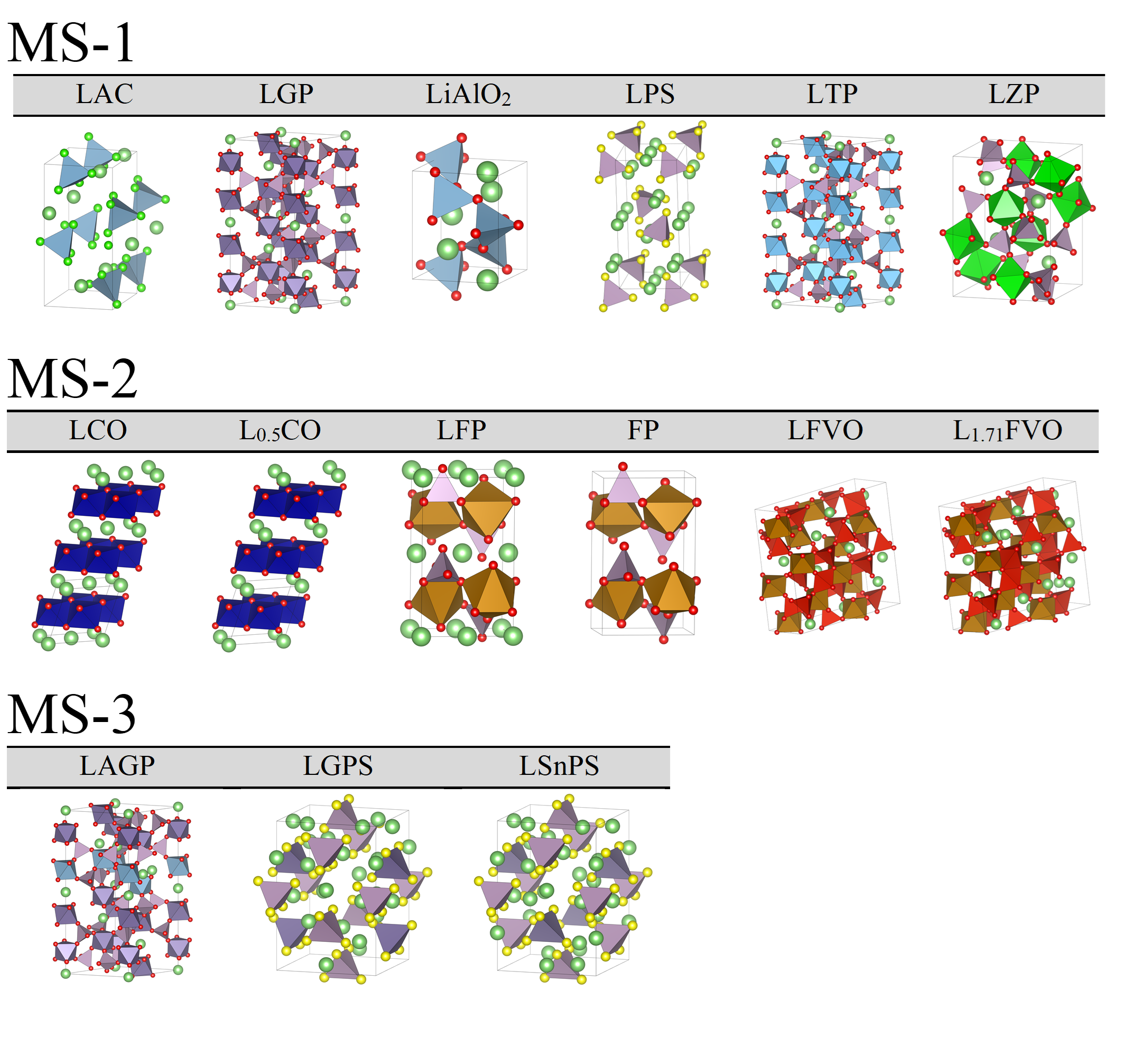
Structures of lithium-based solid electrolytes and cathode materials used in uMLIP benchmarking
Representative lithium materials used for universal potential benchmarking.

Research overview

Universal machine-learning interatomic potentials (uMLIPs) offer a scalable route to screen solid-state electrolytes for safer, higher-energy-density batteries. This work benchmarks eighteen models from the CHGNet, M3GNet, MACE, and ORB families across fifteen lithium-based compounds, including ordered and disordered electrolytes and cathodes.

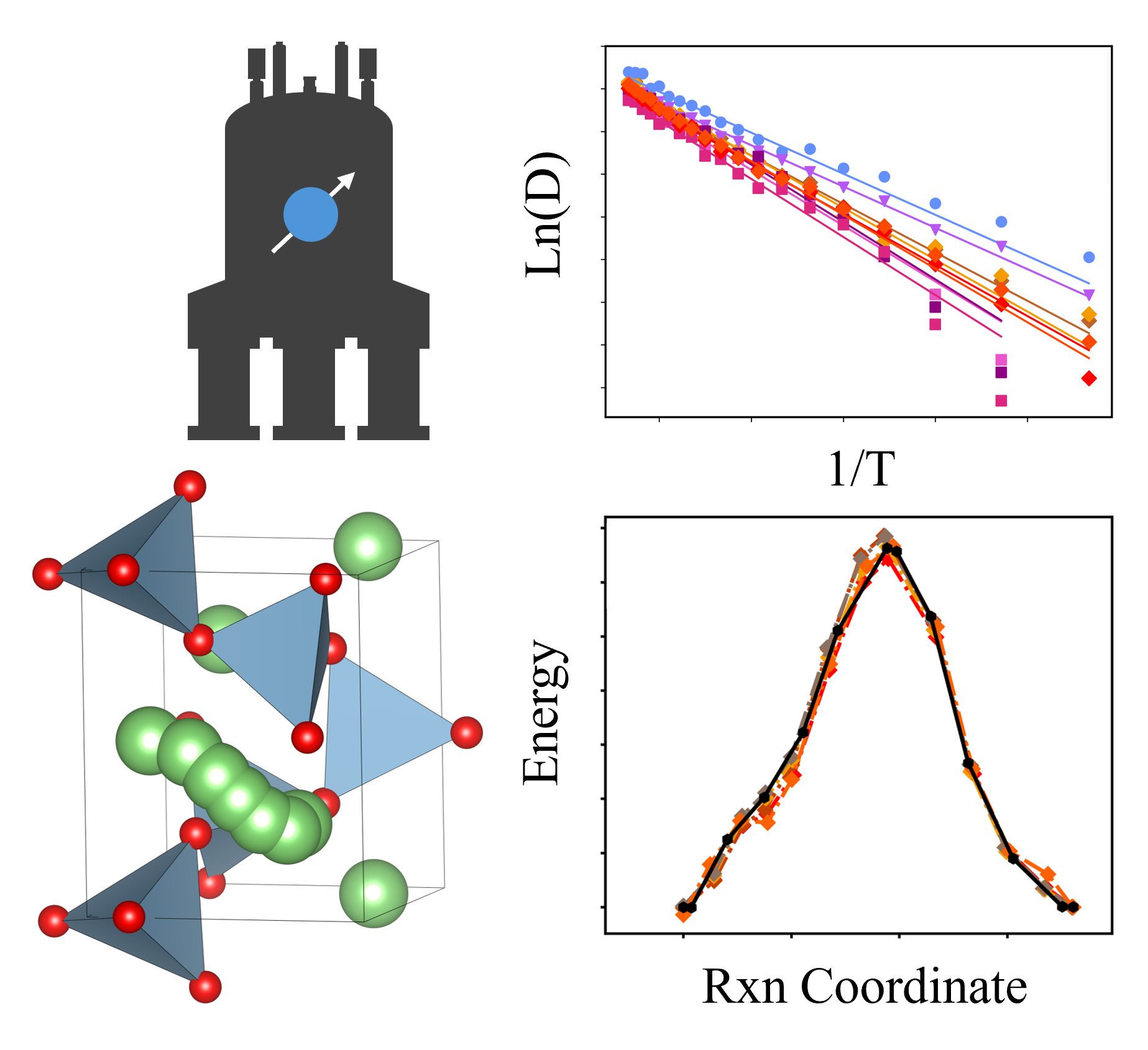
The central comparison uses lithium-ion diffusion data from molecular dynamics and experimental 7Li pulsed-field-gradient NMR (PFG-NMR). Temperature-dependent diffusion coefficients are fitted with the Arrhenius equation to compare activation energies, while structural, energetic, and lower-cost diffusion properties are evaluated as practical screening criteria.

Research themes

  • uMLIP benchmarking for solid-state lithium materials
  • Arrhenius activation energies from MD and PFG-NMR diffusion
  • Low-cost structural, energetic, and diffusion screening

Research direction

The broader goal is to determine when inexpensive computational proxies can reliably identify materials for more demanding diffusion studies. MACE- and ORB-based models show strong overall performance, and a Pearson coefficient of 0.69 between mean absolute errors in diffusion-related properties supports a useful link between screening and high-cost transport calculations. The remaining system dependence highlights the need for careful model validation before uMLIPs are used in automated discovery pipelines.

The preprint provides the full model comparison, datasets, benchmarks, and analysis.

4 MAGNETIC RESONANCE · INSTRUMENTATION RF Coil and Probe Engineering Developing compact, homogeneous resonators for advanced solid-state NMR experiments.

Research overview

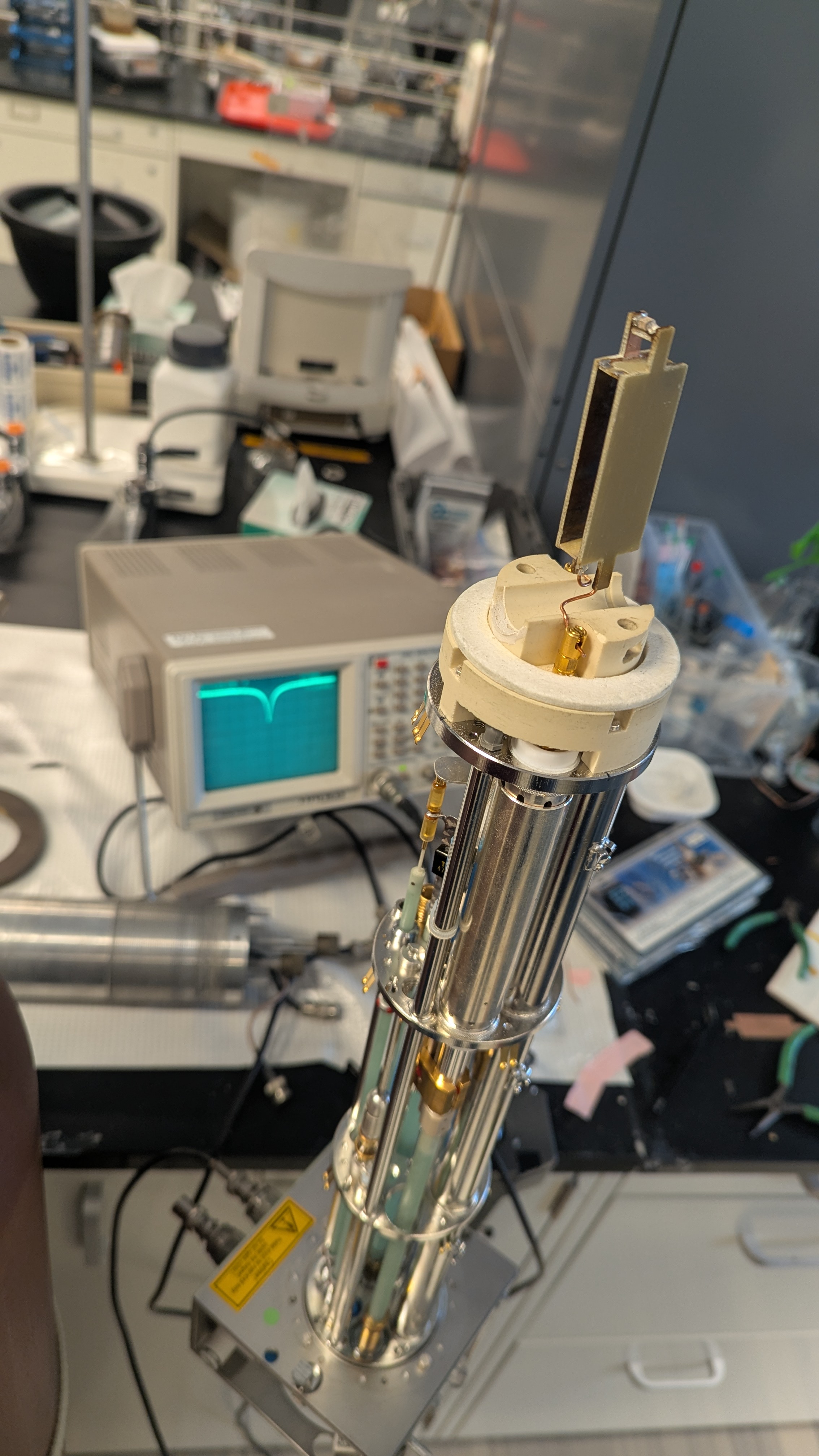
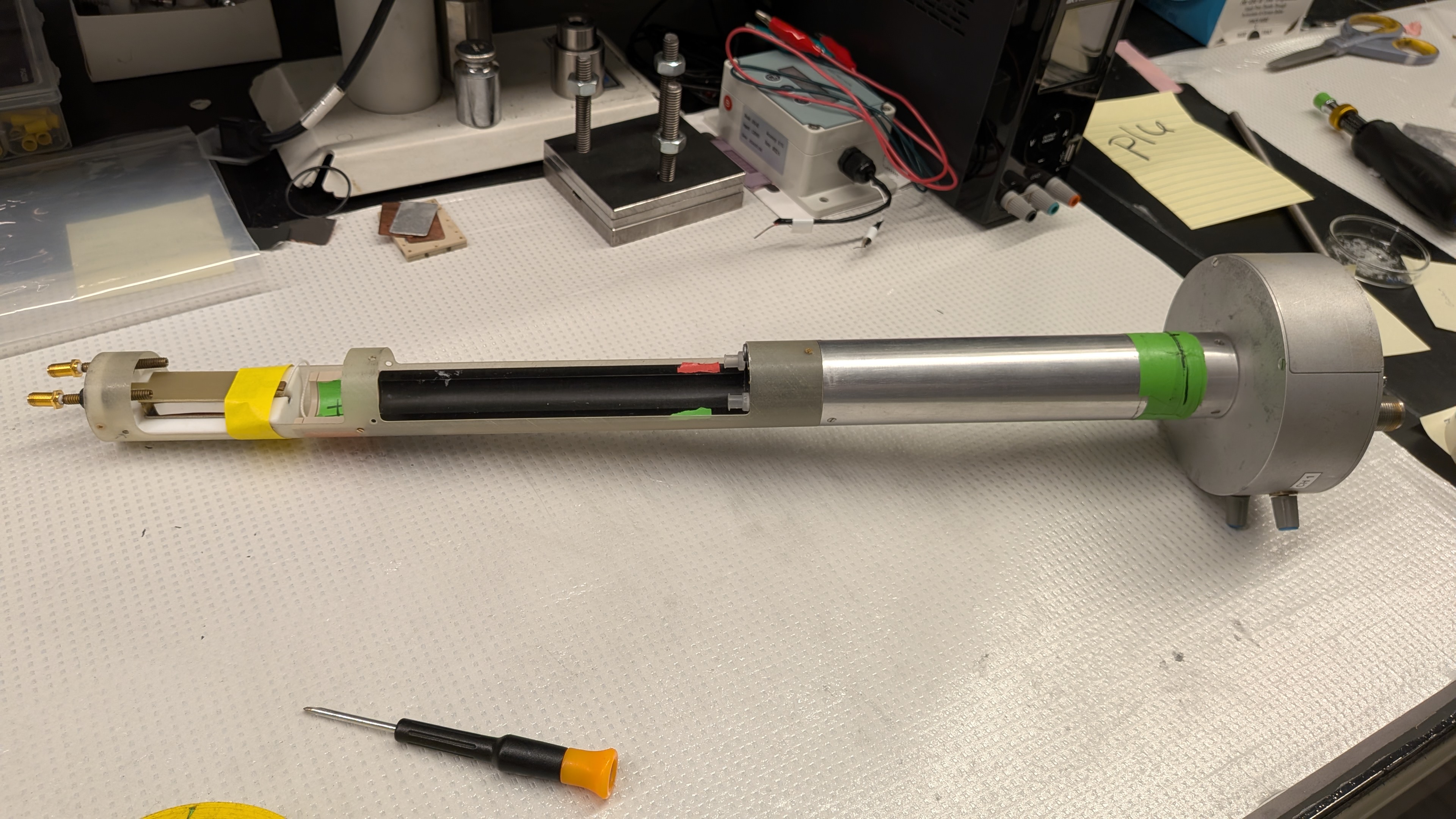
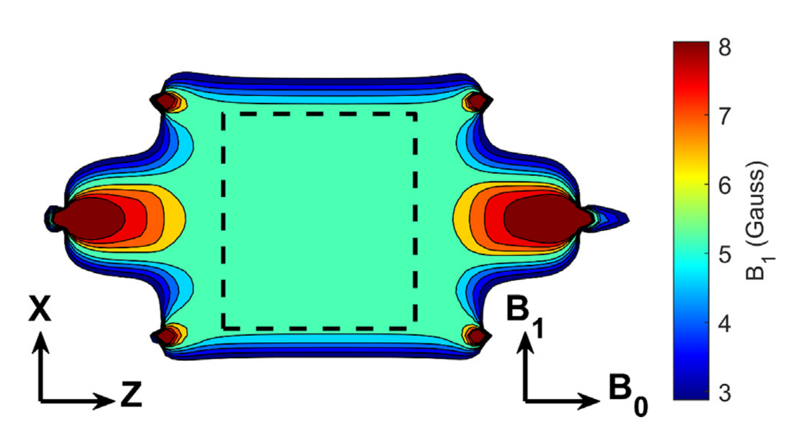
RF probe engineering translates spectrometer capabilities into reliable measurements at the sample. Building on resonator designs from our group and collaborators, this work focuses on the practical design of compact probes for solid-state NMR and MRI, with particular attention to resonator form factor, double-resonance operation, and experimental access around electrochemical samples.

Research themes

  • Resonator form factor and sample access
  • Double-resonance coil and probe capabilities
  • RF-field calculations, mapping, and homogeneity

Research direction

The design process combines electromagnetic field calculations with experimental field mapping to identify and correct sources of inhomogeneity. The aim is to build probes that balance compact geometry, multi-frequency performance, and a uniform sensitive volume for demanding ssNMR and MRI studies.

The cited papers provide background for the resonator-design context; the form-factor, double-resonance, and homogeneity improvements define the current contribution.

Publications

JOURNAL ARTICLE Inorganic Chemistry · 2025

Revealing Na+ Dynamics in the Na4Sn2Ge5O16 Solid Electrolyte Material Using 23Na Solid-State NMR Spectroscopy and Computational Methods

Mengyang Cui ORCID · Cameron A. Gurwell ORCID · Darren H. Brouwer ORCID · Kevin J. Sanders ORCID · Yurij Mozharivskyj ORCID · Gillian R. Goward ORCID

Abstract
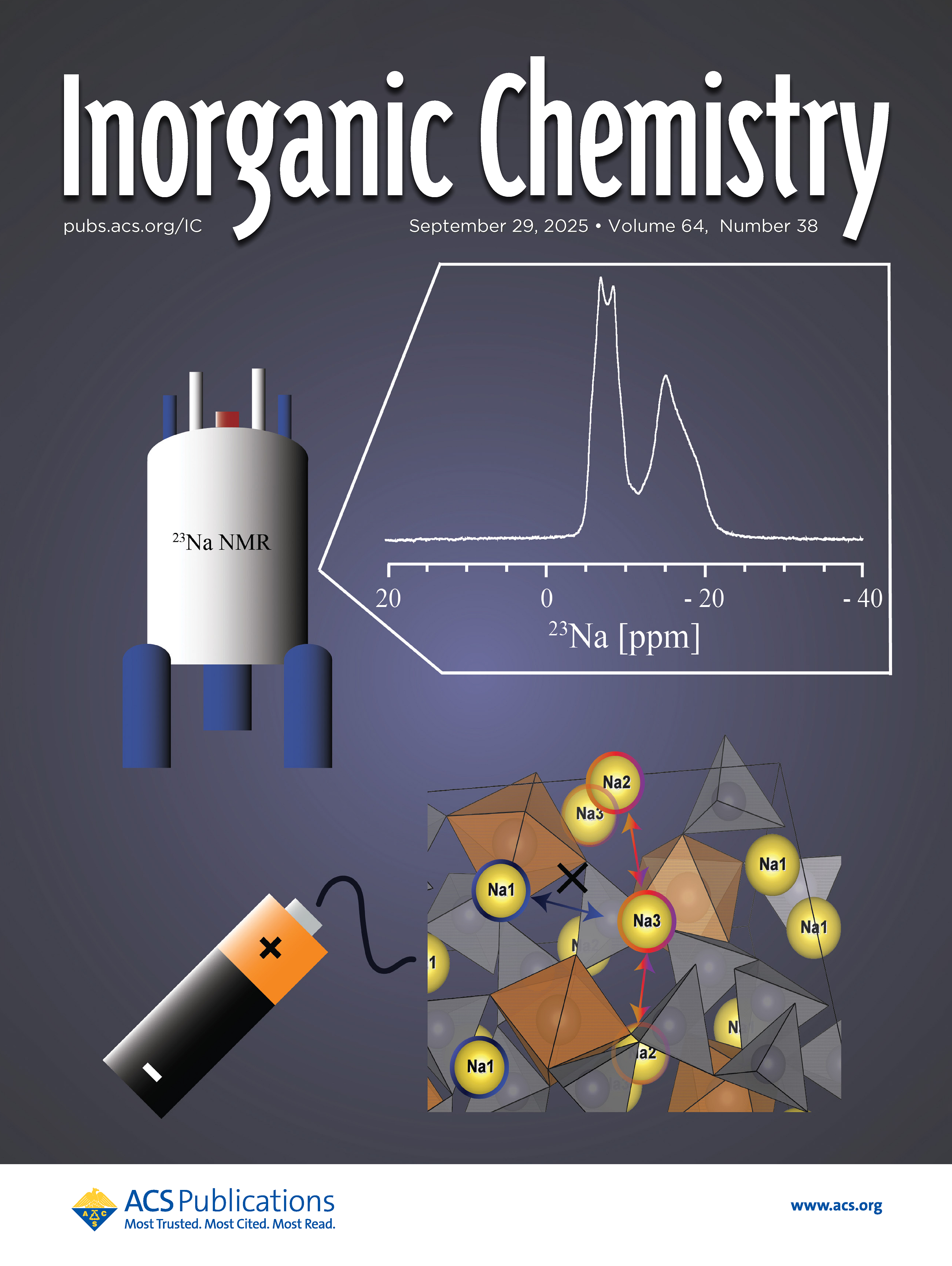
Table of contents graphic showing sodium NMR spectra and the Na4Sn2Ge5O16 structure
Sodium NMR and structural dynamics in the solid electrolyte.

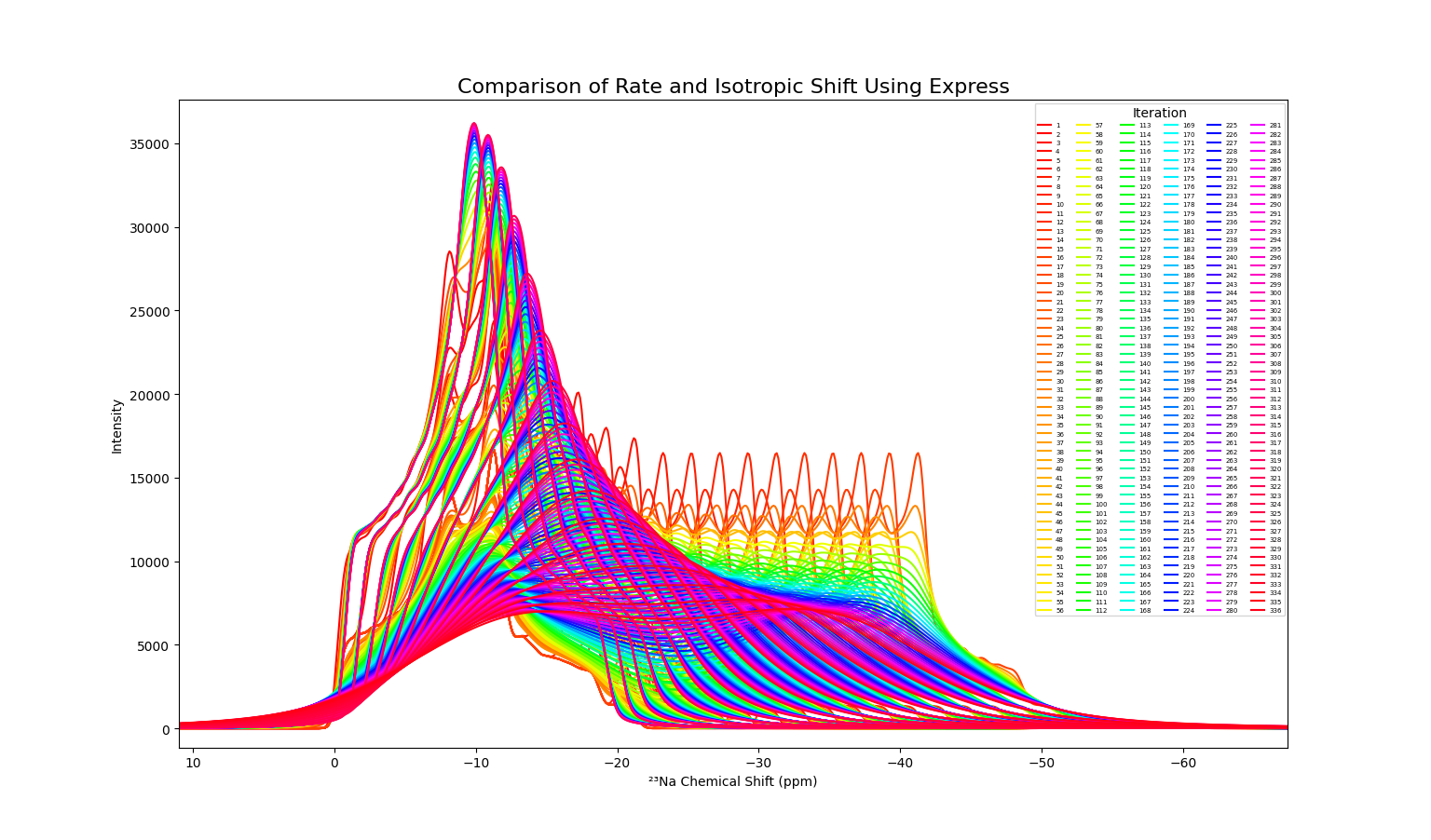
Na4Sn2Ge5O16 is a novel Na+ conductor that can be utilized in the next generation of all-solid-state Na+ batteries (ASSNIBs). 23Na ssNMR experiments were carried out on the Na4Sn2Ge5O16 phase to investigate the Na+ dynamics for the three unique crystallographic Na sites under multiple field strengths (20, 11.7, and 7 T). However, completely resolving the fast exchange Na2 and Na3 pair (4c sites) in the 23Na NMR spectra (Na2–3 resonance) was nontrivial under the available experimental conditions. The subsequent relaxation study supports that the Na2–3 peaks are dynamically mediated, in contrast to immobile Na1 peaks. To further understand the dynamic effects on the 23Na NMR spectra, 1D and 2D 3QMAS 23Na spectra under various magnetic field strengths were analyzed to establish possible ranges of “averaged” quadrupolar parameter values for the two sites. With the assistance of density functional theory (DFT)-based CASTEP calculations, simulated lineshapes of the Na1 site (8d) are established, which exhibit excellent agreement with the experimentally determined ones. Subsequently, the EXchange Program for RElaxing Spin Systems (EXPRESS) script was employed to simulate the Na2–3 peaks under dynamic conditions, with a final estimated exchange rate of 2 × 10⁵ Hz. This work paves the way for future studies of Na+ transport at the molecular level in fast-conducting Na-based solid electrolytes (SEs).
PREPRINT ChemRxiv · April 2026

Experimental Validation of Universal Machine Learning Interatomic Potentials for Lithium-Ion Dynamics in Solid Electrolytes via 7Li NMR

Cameron A. Gurwell ORCID · Taiana L. E. Pereira ORCID · Mengyang Cui ORCID · Carlos A. Martins Junior ORCID · Gillian R. Goward ORCID · Rodrigo A. Vargas-Hernández ORCID

Abstract
Table of contents graphic showing a solid electrolyte structure and machine-learning energy plots
Machine-learning potentials benchmarked against lithium-ion dynamics.

A significant step toward electrification is the adoption of more sustainable energy storage technologies such as batteries. Safer alternatives to conventional solution-state lithium-ion batteries (LIBs) are solid-state batteries, which employ solid-state electrolytes (SSEs). These SSEs can exhibit lithium conductivities comparable to those of liquid electrolytes but are often discovered through experimental trial and error. Computational pipelines powered by universal machine-learning interatomic potentials (uMLIPs) offer a cheaper and scalable route to screen large datasets of candidate SSEs. This recent class of models enables rapid materials exploration compared to traditional quantum chemistry methods and ab initio molecular dynamics (AIMD). In this work, we assess the current capabilities of uMLIPs for solid-state lithium battery applications by systematically benchmarking their predictions against experimental solid-state nuclear magnetic resonance (ssNMR) diffusion data and density functional theory (DFT) calculations. We considered twelve different Li-based compounds, five ordered electrolytes, three disordered electrolytes, and four cathodes. This study includes eighteen different uMLIPs categorized into four main families, CHGNet, M3GNet, MACE, and ORB. Our results demonstrate that model performance is strongly dependent on both the underlying architecture and the chemical system under investigation. MACE- and ORB-based models consistently achieve higher accuracy across structural, energetic, and diffusion-related properties. However, the reliability of lithium diffusion predictions remains system-dependent, highlighting current limitations in the transferability of uMLIPs for complex materials. These findings provide a critical assessment of the readiness of uMLIPs for integration into computational pipelines aimed at accelerating the discovery of next-generation solid-state battery materials.

Conference Presentations

Oral Presentations

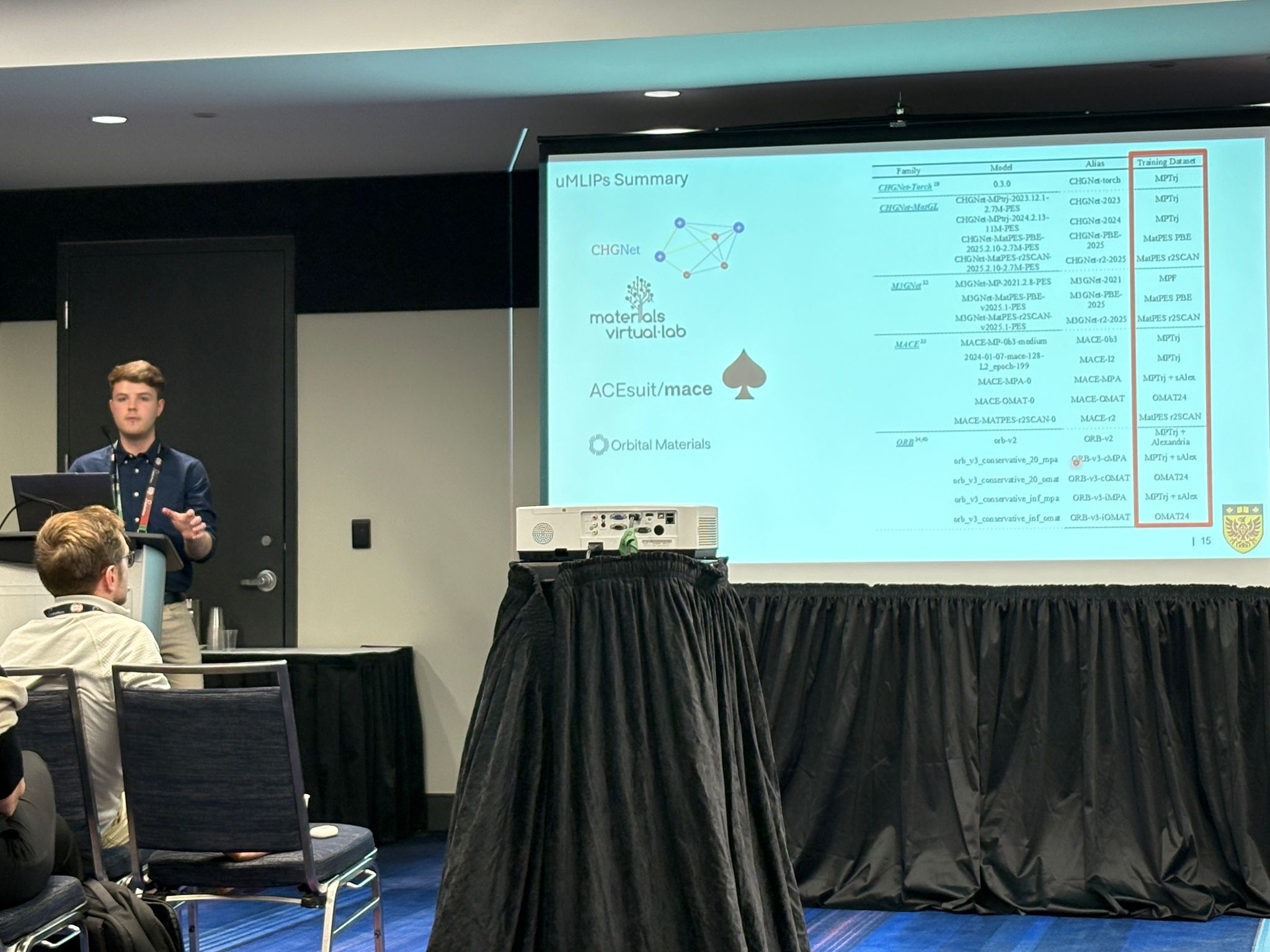
How Accurate Are Universal Machine Learning Interatomic Potentials Using Solid-State NMR Dynamics for Lithium Battery Materials?

Canadian Chemistry Conference and Exhibition (CSC), Toronto, ON, 2026. Abstract ↗

Elucidating the Structure of a Series of Doped Solid-State Electrolytes via Magic-Angle-Spinning 2D NMR

SOUSCC 53, University of Guelph, Guelph, ON, 2025. Abstract ↗

Determining Ion Dynamics Within Fast Ion Conducting Solid-State Sodium Electrolytes Using 23Na Magic-Angle-Spinning (MAS) NMR and Simulated 1D Spectra

MOOT Conference, McGill University, Montreal, QC, 2024. Abstract ↗

Determining Ion Dynamics in Solid-State Sodium Electrolytes Using 23Na Magic-Angle-Spinning (MAS) NMR

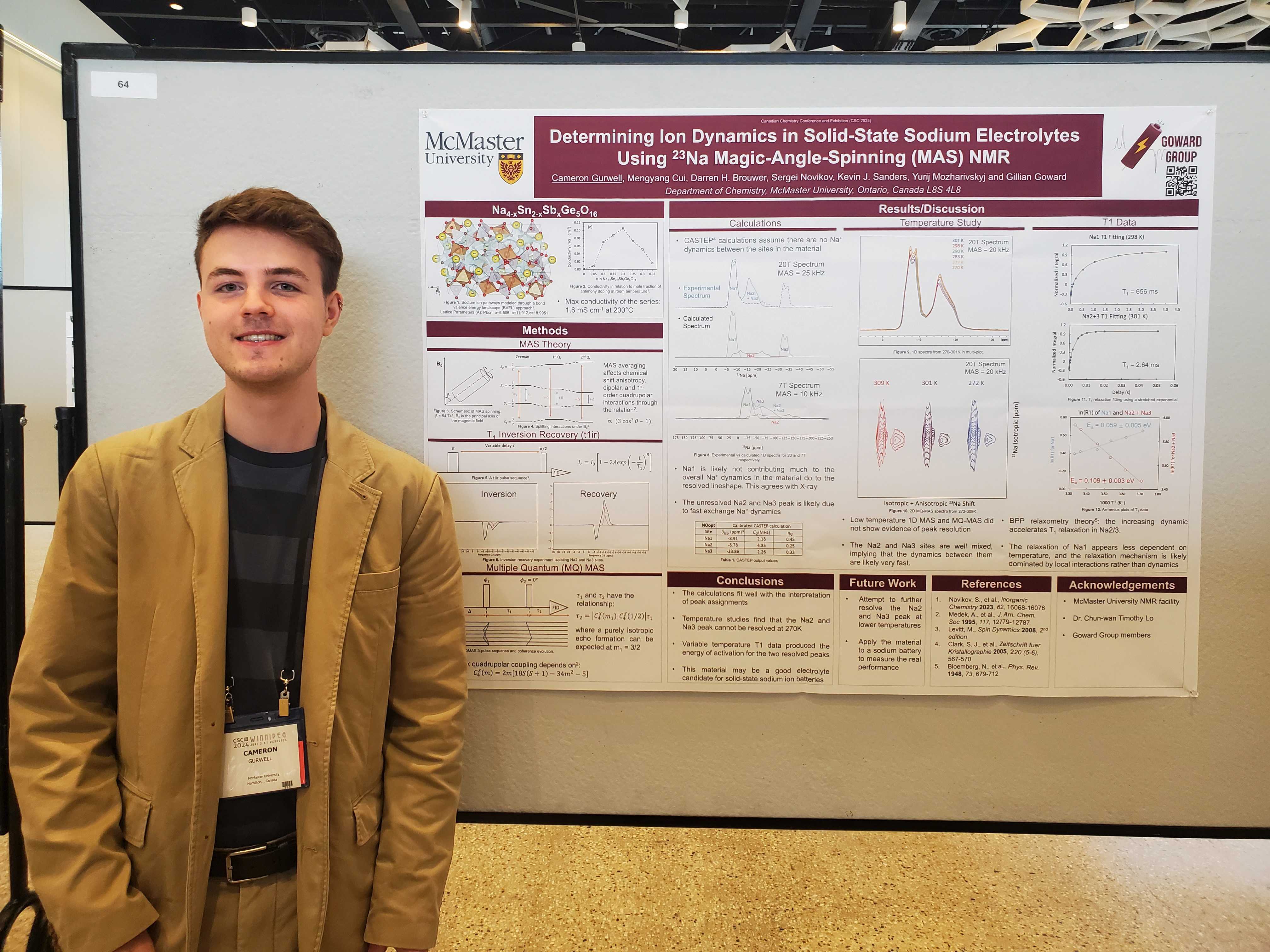
Canadian Chemistry Conference and Exhibition (CSC), Winnipeg, MB, 2024. Abstract ↗

Poster Presentations

Tracking Lithium Plating in Full Cells with Direct 7Li MRI

MOOT Conference, SickKids Hospital, Toronto, ON, 2026. Abstract ↗ To be posted.

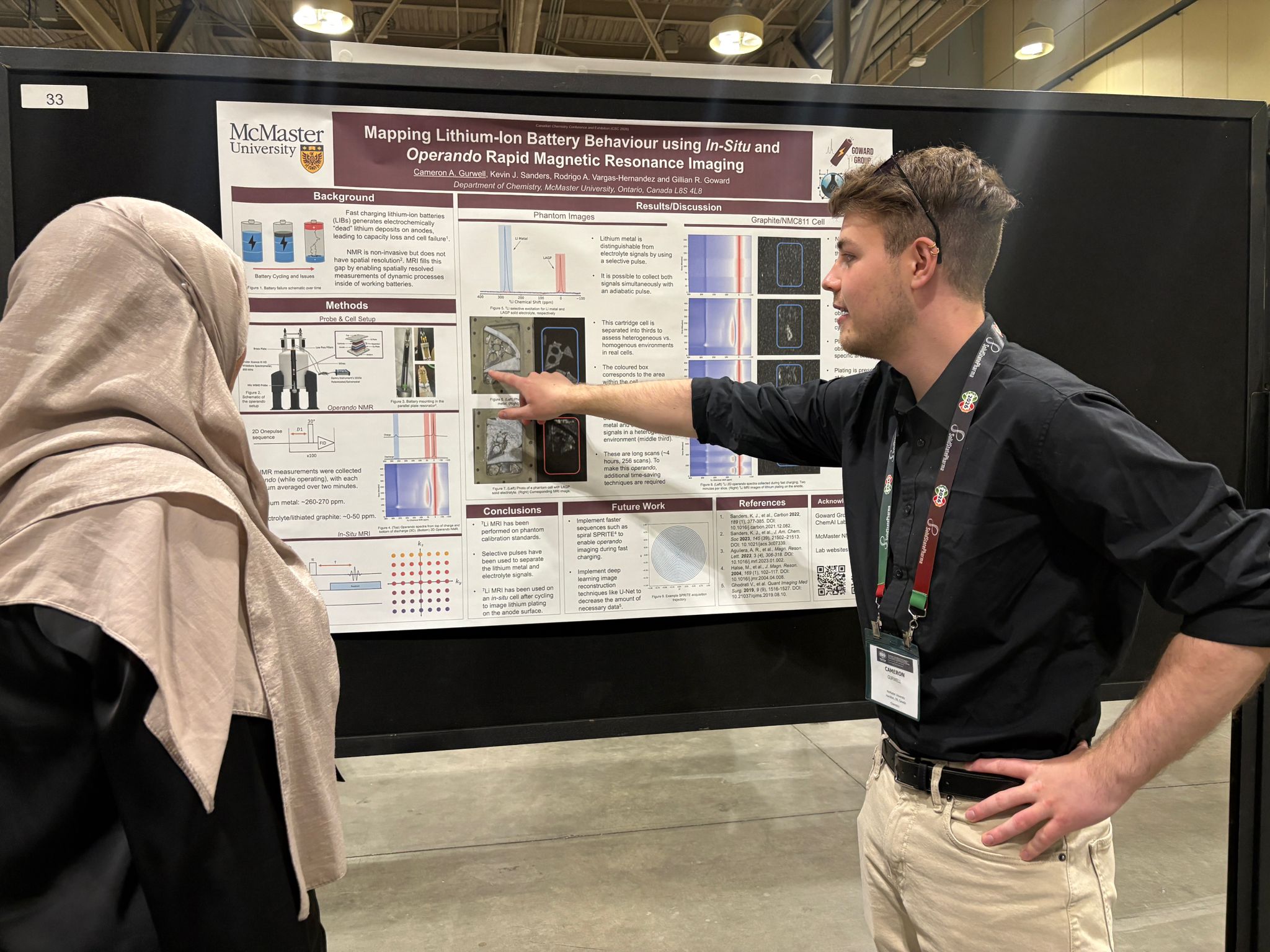
Mapping Lithium-Ion Battery Behaviour Using In Situ and Operando Rapid Magnetic Resonance Imaging

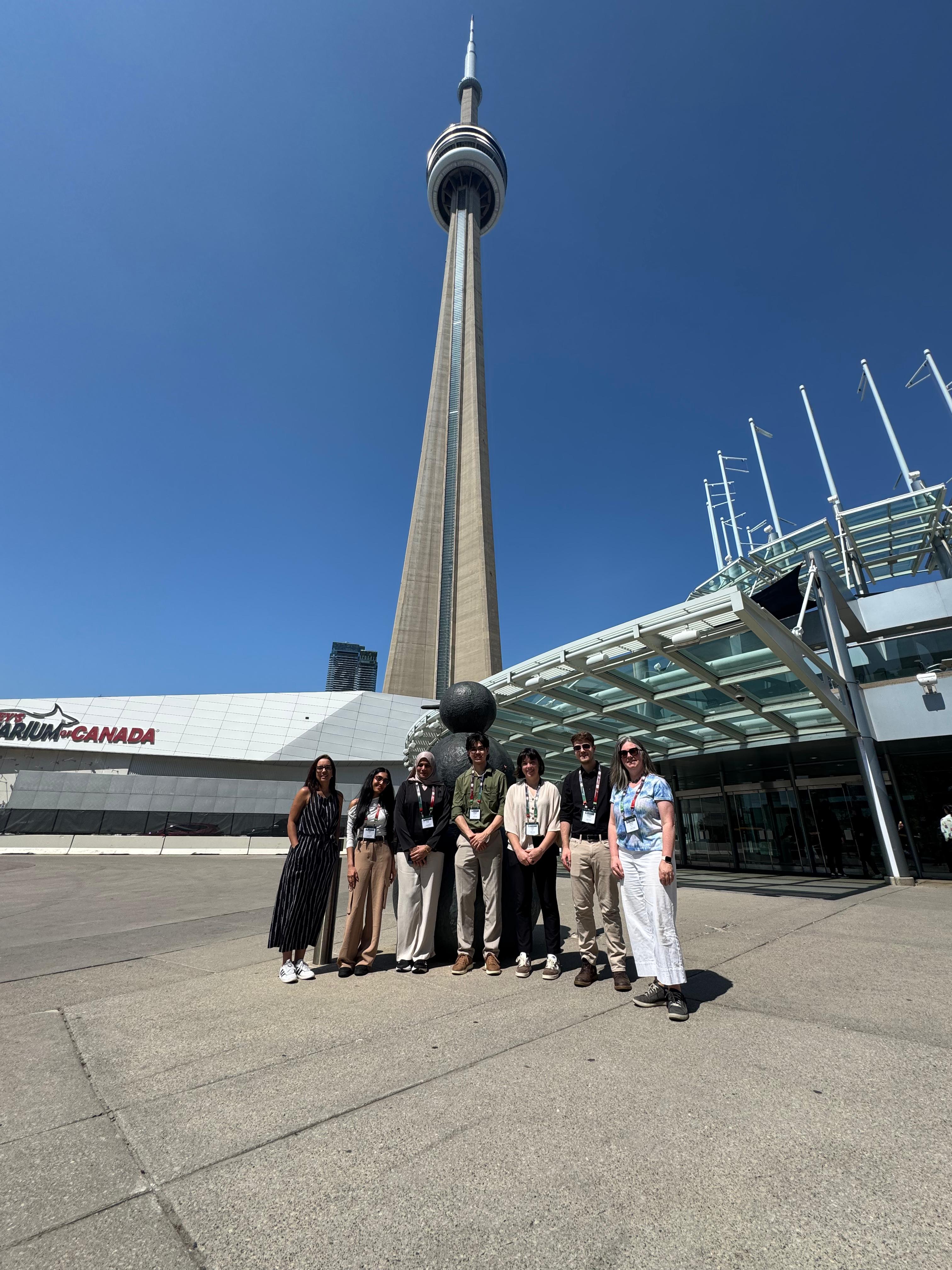
Canadian Chemistry Conference and Exhibition (CSC), Toronto, ON, 2026. Abstract ↗

Determining Ion Dynamics in Solid-State Sodium Electrolytes Using 23Na Magic-Angle-Spinning (MAS) NMR

Canadian Chemistry Conference and Exhibition (CSC), Winnipeg, MB, 2024. Abstract ↗

Awards

Dean's Honour List

2024, 2025

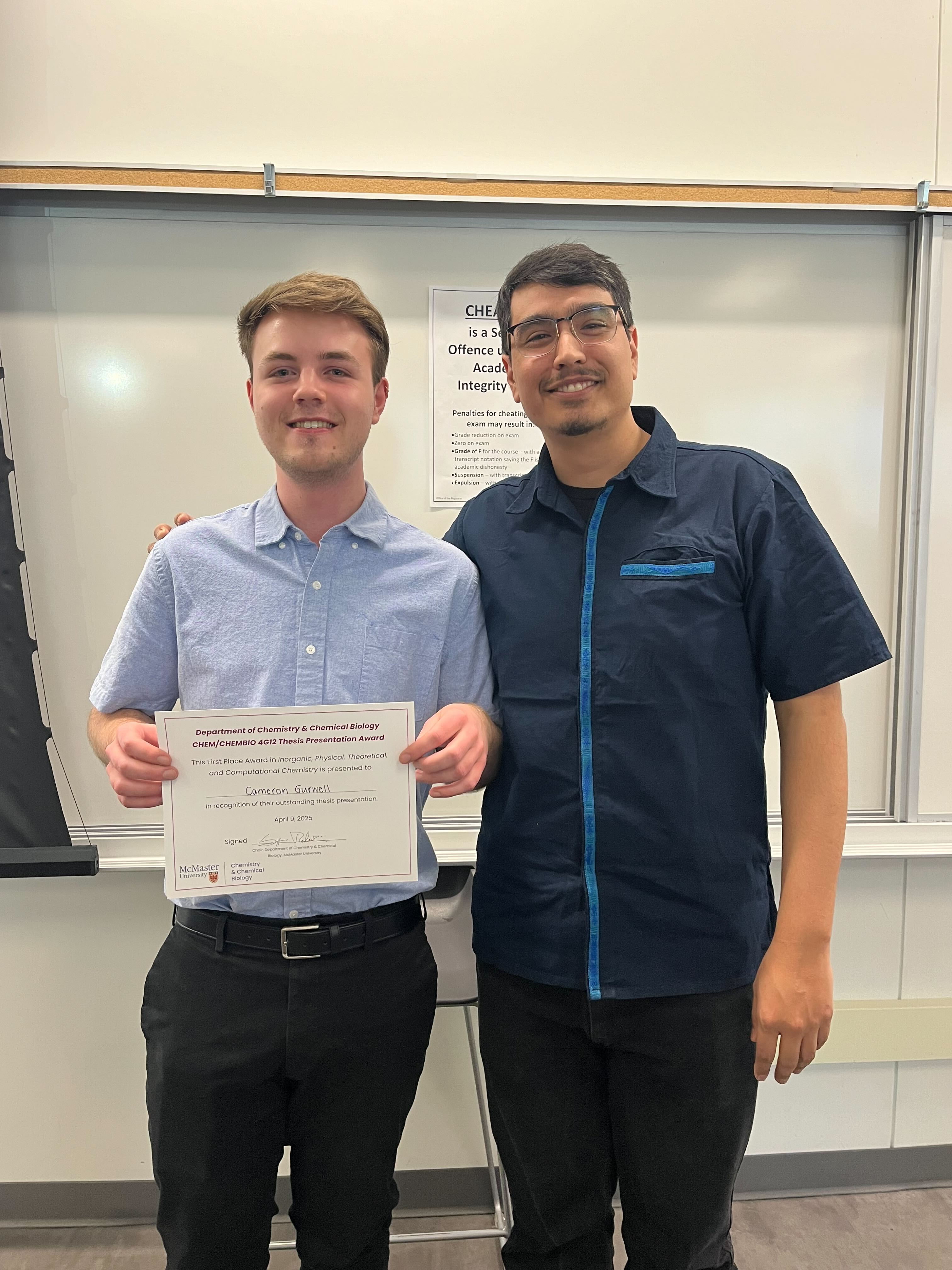
Undergraduate Thesis Award (1st Place)

2025

The Alan Hitchen Memorial Chemistry Graduate Scholarship

2026

The Greg Bahun Teaching Assistant Award

2026

Teaching

Select a course to view details.

Graduate Coursework

Select a course to view details.